
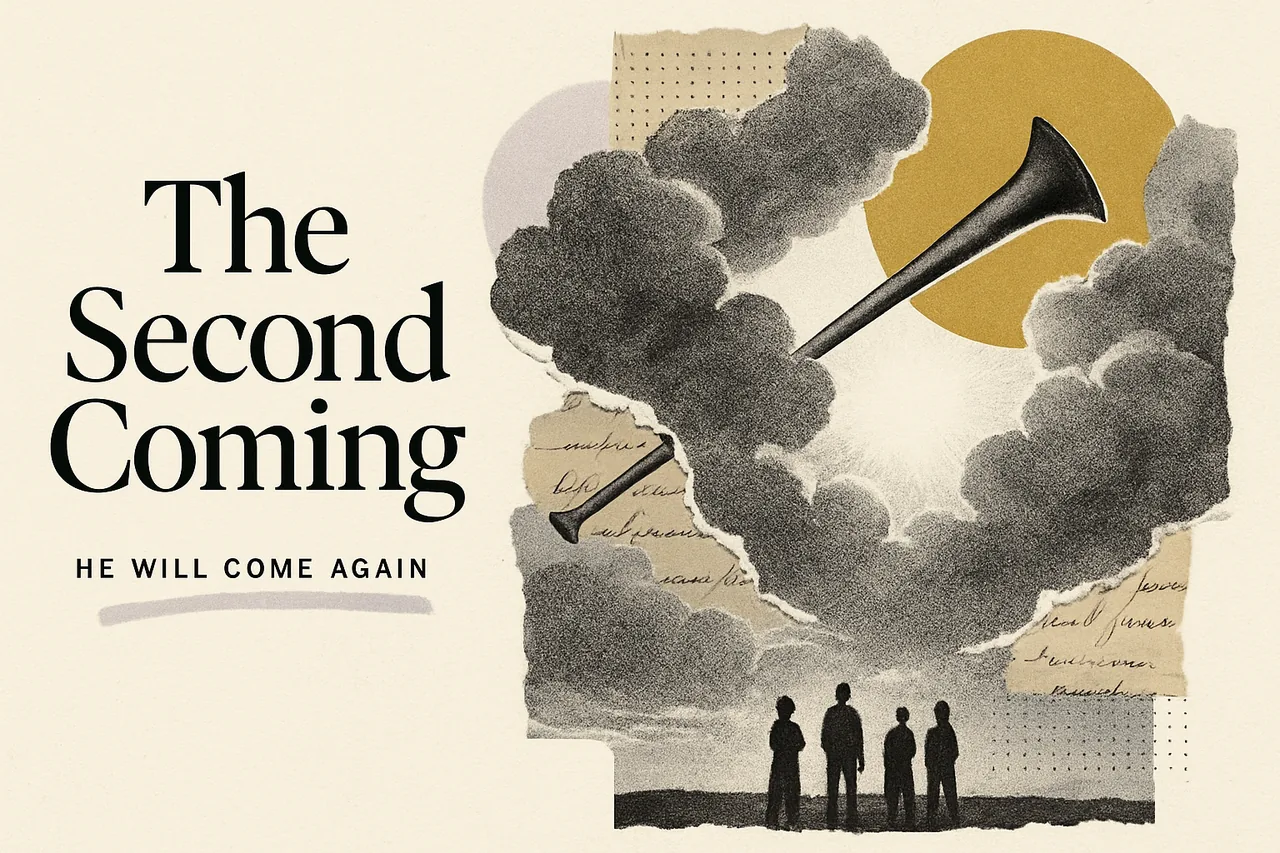
If you’re looking for Bible verses about the second coming to memorize, you’re reaching for a hope the New Testament returns to again and again — the promise that this same Jesus will come back, personally and visibly, to make everything right. It’s a doctrine meant to be carried: it steadies you in suffering, keeps you awake and ready, and comforts you in grief. A memorized promise of Christ’s return does its work in exactly the moments the present feels like all there is. Here are ten verses worth learning by heart, each with what it promises and a tip to make it stick, plus a plan to learn them.
Personal note from Efrén: I’d be lying if I told you every decision of my day is made as if the Lord were coming right now — but I can tell you with confidence that I think often about the second coming of our Lord Jesus Christ. I long for Him to come, and I join the plea at the very end of Revelation, where the Spirit and the Bride say “Come” (Revelation 22:17). However good a life the Lord may grant us here, nothing we can live or experience on this earth will ever compare with being with Him for all eternity.
How Scripture speaks about the second coming
The return of Christ is one of Scripture’s most consistently affirmed hopes. Jesus promised it himself; angels confirmed it at his ascension; the apostles taught it in letter after letter. And it is always described the same way — personal (the same Jesus, not merely his influence), visible (“every eye will see him”), and glorious (coming with power and with all his angels). This isn’t a fringe speculation; it’s the sure horizon the whole New Testament leans toward.
Two things keep this hope healthy, and both shape the verses below. First, Scripture is emphatic that no one knows the timing — Jesus said plainly that not even the angels know the day or hour, and he warned against date-setting. So these verses aim at readiness and hope, never at prediction. Second, the return is meant to change how you live now: Paul gives the great “caught up together” passage explicitly so that believers “encourage one another with these words.” Memorize a few of these and you carry not idle curiosity about the future but a living hope that steadies the present — comfort for grief, courage for suffering, and a reason to stay awake.
10 Bible verses about the second coming to memorize
1. Acts 1:11 — the same Jesus, coming back
“and said, Men of Galilee, why do you stand looking into heaven? This Jesus, who was taken up from you into heaven, will come in the same way as you saw him go into heaven.”
Acts 1:11 is the foundation of this hope, spoken by angels as the disciples watched Jesus ascend: “this Jesus… will come in the same way as you saw him go.” It guarantees the return is personal and bodily — not a symbol, not merely his ongoing influence, but the same Christ, visibly. If you learn one verse on his coming, learn this promise made at the very moment he left.
Tip: anchor it to the two directions — the way he went is the way he’ll come. Fixing that mirror (up into heaven, back from heaven, the same Jesus) makes the promise concrete and easy to hold.
2. John 14:3 — “I will come again”
“And if I go and prepare a place for you, I will come again and will take you to myself, that where I am you may be also.”
Jesus’ own promise, given to comfort troubled disciples the night before he died: “I will come again and will take you to myself, that where I am you may be also.” The purpose of his return is reunion — that his people would be with him. It turns the second coming from a doctrine into a longing: he’s coming back for you.
Tip: learn it around the reason — he comes again “that where I am you may be also.” Fixing the purpose (to be together) keeps the verse warm; the return isn’t primarily about events, but about being with Christ.
3. 1 Thessalonians 4:16–17 — caught up together
“For the Lord himself will descend from heaven with a cry of command, with the voice of an archangel, and with the sound of the trumpet of God. And the dead in Christ will rise first. Then we who are alive, who are left, will be caught up together with them in the clouds to meet the Lord in the air, and so we will always be with the Lord.”
The great resurrection-and-return passage: the Lord descends with a cry of command, the dead in Christ rise first, and the living are “caught up together with them… to meet the Lord in the air.” Paul gave it to comfort grieving believers — those who died in Christ lose nothing; they rise first. It’s the verse for the hope of reunion beyond the grave.
Tip: learn it as the sequence — the Lord descends, the dead rise, the living are caught up, and “we will always be with the Lord.” Fixing the order holds the long passage together and ends it where it’s meant to: forever with him.
4. 1 Corinthians 15:52 — in the twinkling of an eye
“in a moment, in the twinkling of an eye, at the last trumpet. For the trumpet will sound, and the dead will be raised imperishable, and we shall be changed.”
The suddenness and the transformation: “in a moment, in the twinkling of an eye, at the last trumpet… the dead will be raised imperishable, and we shall be changed.” However long the wait, the event itself is instant — and it brings not just Christ’s return but the resurrection of the body. For anyone facing death or decay, this verse promises a change quicker than a blink.
Tip: hold the speed image — “the twinkling of an eye.” A verse with a vivid picture returns with the picture; recall it whenever the wait feels long, and let the instant transformation answer the delay.
5. Revelation 1:7 — every eye will see him
“Behold, he is coming with the clouds, and every eye will see him, even those who pierced him, and all tribes of the earth will wail on account of him. Even so. Amen.”
The public, unmistakable nature of the return: “he is coming with the clouds, and every eye will see him.” No secret event, no private arrival — the whole world will witness it at once. It answers every counterfeit and every doubt: when Christ comes, there will be no missing it.
Tip: learn the phrase “every eye will see him” as the anchor. Fixing the universality guards the doctrine from the idea of a hidden or symbolic coming; the return is as public as lightning.
6. Matthew 24:30 — the sign of the Son of Man
“Then will appear in heaven the sign of the Son of Man, and then all the tribes of the earth will mourn, and they will see the Son of Man coming on the clouds of heaven with power and great glory.”
Jesus’ own description of his coming “on the clouds of heaven with power and great glory.” It’s the same glory the Old Testament reserved for God, now belonging to the returning Christ. The verse fixes the manner of his coming — not lowly as at Bethlehem, but in unveiled glory and power.
Tip: contrast it with his first coming as you learn it — once in humility, now “with power and great glory.” Memorizing the contrast deepens the verse: the same Jesus, returning in the majesty that was veiled the first time.
7. 2 Peter 3:10 — the day will come
“But the day of the Lord will come like a thief, and then the heavens will pass away with a roar, and the heavenly bodies will be burned up and dissolved, and the earth and the works that are done on it will be exposed.”
A sober, steadying verse: “the day of the Lord will come like a thief,” and the present order will be dissolved and remade. Peter’s point isn’t fear but urgency — since all this is passing, what kind of people ought we to be? It keeps the return from becoming abstract; it has moral weight for how you live today.
Tip: learn the image — the day comes “like a thief,” unannounced. Fixing the unexpectedness ties the verse to readiness: you prepare not because you know when, but because you don’t.
8. Matthew 24:42 — stay awake
“Therefore, stay awake, for you do not know on what day your Lord is coming.”
The practical command that the whole doctrine drives toward: “stay awake, for you do not know on what day your Lord is coming.” Not date-setting, not idle speculation — watchfulness. Because the timing is hidden, readiness is the only sane response. This is the verse that turns the second coming into a way of living.
Tip: learn it as the response to not-knowing — because you don’t know the day, stay awake. Fixing that logic (uncertainty produces readiness, not anxiety) is the verse’s whole practical point.
9. Philippians 3:20–21 — we await a Savior
“But our citizenship is in heaven, and from it we await a Savior, the Lord Jesus Christ, who will transform our lowly body to be like his glorious body, by the power that enables him even to subject all things to himself.”
The believer’s true citizenship and posture: “our citizenship is in heaven, and from it we await a Savior… who will transform our lowly body to be like his glorious body.” It names the return as the moment our redemption is completed, bodies and all. For anyone weary of a failing body or a broken world, this verse fixes the eyes on the Savior we’re awaiting.
Tip: learn it around the posture verb — we await a Savior. Memorizing that active waiting reframes the whole Christian life as expectant, leaning forward toward the one who’s coming.
10. Revelation 22:12 — “I am coming soon”
“Behold, I am coming soon, bringing my recompense with me, to repay each one for what he has done.”
Nearly the last words of the Bible, spoken by Christ himself: “Behold, I am coming soon, bringing my recompense with me.” Scripture closes on the promise of his return and the certainty of his justice. It’s a fitting final verse to memorize — the Bible’s own last word is that Jesus is coming, and it invites the reply the next verse gives: “Come, Lord Jesus.”
Tip: learn it paired with that response — “I am coming soon” / “Come, Lord Jesus.” Fixing the promise and its answer together turns the verse into a prayer, which is exactly how the Bible ends it.
A plan to learn these
Learning ten verses about Christ’s return is a couple of months of steady, unhurried work. Begin with the plainest guarantee and the warmest promise:
- Days 1–5: Acts 1:11 — the same Jesus, coming back. Learn it around the “went / will come” mirror, out loud, recalling with the text hidden.
- Days 6–9: John 14:3 — “I will come again.” Short, and it gives the return its purpose (reunion). Review Acts 1:11 daily.
- Week 3: add 1 Thessalonians 4:16–17 (for grief and reunion) and Matthew 24:42 (stay awake) — one for comfort, one for readiness.
- Ongoing: work through the rest at one every few days, always reciting the verses you already hold before adding a new one.
The habit that keeps them: let the old verses outrank the new one. A fresh verse needs daily recall; a settled one needs only an occasional pass to stay — the stretching schedule called spaced repetition, and the reason a promise of Christ’s return is with you the next time the present feels like all there is. The method for learning each verse is in our complete guide to memorizing Scripture. And if you’d rather not track reviews by hand, VerseKeep keeps every verse on its own clock, so the hope stays ready.
Fix your eyes forward today
The world will keep insisting the present is all there is — so plant the counter-promise now. Take Acts 1:11, learn that this same Jesus is coming back, and let it lift your eyes past today. Ten minutes now; a horizon that steadies everything before it. When you’re ready to go wider, our collection on hope carries the same forward-looking confidence, and the scripture memory systems guide helps you keep it all for life.
Scripture quotations are from the ESV® Bible (The Holy Bible, English Standard Version®), © 2001 by Crossway. Used by permission. All rights reserved.
Frequently asked questions
What is the best verse about the second coming to memorize?
Acts 1:11 — "This Jesus, who was taken up from you into heaven, will come in the same way as you saw him go into heaven." It's the angels' own promise at the ascension: the same Jesus, personally, visibly, will return. It anchors the whole doctrine in a plain guarantee, which is why it's the one to learn first.
Does the Bible say Jesus is coming back?
Yes, repeatedly and plainly. Jesus promised it ("I will come again," John 14:3), angels confirmed it (Acts 1:11), and the apostles taught it everywhere (1 Thessalonians 4:16–17; Titus 2:13; Revelation 22:12). The return of Christ — visible, personal, and glorious — is one of the most consistently affirmed hopes in the New Testament.
Why memorize verses about Christ's return?
Because the second coming is meant to shape how you live now — with hope in suffering, readiness instead of complacency, and comfort in grief (1 Thessalonians 4:18 gives these verses precisely so believers can "encourage one another"). A memorized promise of his return steadies you in the moments the present feels like all there is.
Can we know when Jesus will return?
No. Jesus said plainly that no one knows the day or hour (Matthew 24:36), and he warned against date-setting. Scripture's call is not to predict the timing but to be ready — "stay awake" (Matthew 24:42). The verses here aim at that readiness and hope, not speculation.